



Why More PPF Shops Are Switching to Pre-Cut Software in 2026
The PPF industry is changing quickly.
In the past, many shops relied almost entirely on experienced installers to measure, position, and hand cut paint protection film directly on the vehicle. For a long time, this was considered the standard way to complete a professional PPF installation.
But in 2026, more PPF shops are starting to rethink this workflow.
The reason is simple: today’s shops need to finish jobs faster, reduce material waste, train new staff more easily, and give customers more confidence during the installation process.
Hand cutting still has value, especially for custom work and complex details. But for growing shops, relying only on manual cutting can make the business harder to scale.
This is why more installers, shop owners, and distributors are switching to pre-cut PPF software and professional cutting machines.
Pre-cut software is no longer just a tool for cutting film. It is becoming an important part of a smarter, more stable, and more repeatable PPF workflow.
The PPF Market Is Becoming More Efficiency-Driven
PPF customers are becoming more familiar with the service.
Many car owners now understand the value of paint protection film. They know PPF can help protect the original paint from scratches, stone chips, road debris, and daily driving damage.
At the same time, customer expectations are also increasing.
They want cleaner installation, faster delivery, better edge finishing, and less risk during the process. For new cars, luxury cars, and high-value vehicles, many customers also care about whether the installer will cut directly on the paint.
For PPF shops, this creates pressure.
A shop cannot only depend on “slow but careful” work if daily orders continue to grow. It also cannot rely too heavily on one or two senior installers for every cutting decision.
As the market becomes more competitive, efficiency is no longer just a bonus. It becomes part of the shop’s ability to survive and grow.
A modern PPF shop needs a workflow that can handle more vehicles, reduce mistakes, and keep results consistent.
This is one of the main reasons why pre-cut software is becoming more popular.
Manual Cutting Is Still Useful, But It Is Hard to Scale
Manual cutting is not outdated.
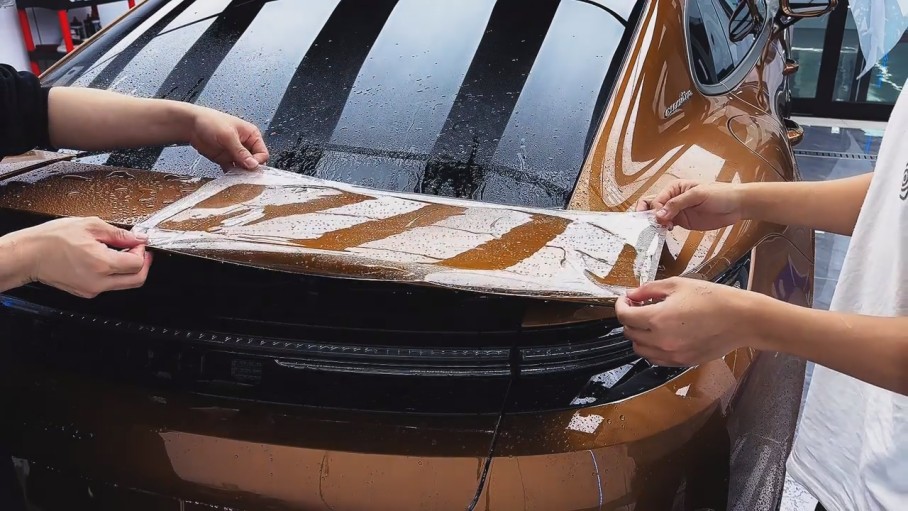
A skilled installer can still create excellent results by hand, especially when working on custom vehicles, modified bumpers, repaired panels, wide-body kits, or special customer requests.
Hand cutting gives the installer flexibility. The installer can adjust the film directly according to the actual shape and condition of the vehicle.
This flexibility is valuable.
However, for shop management, manual cutting also has clear limitations.
First, it depends heavily on personal experience. A senior installer may know exactly how much extra film to leave, where to trim, and how to avoid paint damage. But a beginner may need months or even years to build the same judgment.
Second, manual cutting takes time. The installer needs to position the film, check the panel, trim carefully, and make adjustments on the vehicle. For complex vehicles, the cutting time can be difficult to predict.
Third, hand cutting creates more pressure when working on high-value cars. Even when the installer is careful, customers may still worry when they see blades being used close to the paint.
For a small shop with limited orders, manual cutting may still be manageable.
But when a shop wants to grow, take more appointments, train more people, or serve more vehicle models, manual cutting alone can become a bottleneck.
That is why many shops are not replacing hand skills completely. Instead, they are using pre-cut software to reduce unnecessary manual cutting and make the main workflow more efficient.
Pre-Cut Software Helps Shops Finish Jobs Faster
One of the biggest advantages of pre-cut software is time control.
With pre-cut PPF software, the shop can select the correct vehicle model, choose the panel, adjust the pattern if needed, and send the design to a cutting machine before installation begins.
This allows the film to be prepared in advance.
Instead of spending too much time measuring and trimming directly on the vehicle, the installer can focus more on the installation itself: cleaning, positioning, squeegeeing, edge wrapping, and final inspection.
For busy shops, this makes a real difference.
When the film pieces are prepared earlier, the installation bay can move more smoothly. Staff can arrange work more clearly. Customers can receive more predictable delivery times.
Pre-cutting also helps reduce repeated trial-and-error during the installation process.
A good pre-cut workflow does not simply make one job faster. It helps the whole shop become more organized.
When more vehicles come in, this kind of time control becomes increasingly important.
Accurate Vehicle Data Is the Core of Pre-Cut PPF
Pre-cut software is only useful when the vehicle data is reliable.
This is one of the most important points for any shop considering a pre-cut system.
A cutting machine only follows the data it receives. If the pattern is wrong, the machine will cut the wrong shape very accurately. That does not solve the problem. It only makes the mistake faster.
For PPF shops, inaccurate data may cause several issues:
→ Edges may be too short
→ Sensor holes may not align
→ Door handle areas may need extra correction
→ Bumper curves may not fit smoothly
→ Headlight or taillight shapes may be inaccurate
→ Installers may need to recut and waste material
This is why vehicle pattern data is the foundation of a good pre-cut workflow.
When choosing PPF software, shops should not only ask how many patterns are included. They should also consider whether the data covers the vehicles in their local market, whether the patterns are practical for installation, and whether the system can support updates.
SlaByte Precision Data Suite provides 200,000+ vehicle patterns to support PPF, window tint, and vinyl cutting workflows. This gives shops more options when handling different vehicles and different film-cutting projects.
For a PPF shop, strong vehicle data means less time searching, less time adjusting, and more confidence before cutting.
Pre-Cut Software Makes Training Easier
Training is one of the biggest challenges for PPF shops.
A good installer is not easy to develop. It takes time to understand film behavior, surface tension, stretching direction, edge finishing, moisture control, and pressure control.
If new staff must start by cutting film directly on cars, the learning pressure is very high.
Pre-cut software can make training easier because it reduces the need for beginners to make difficult cutting decisions at the beginning.
New staff can first focus on the core installation process:
→ Cleaning the vehicle surface
→ Identifying the correct panel
→ Positioning the pre-cut film
→ Controlling water and slip solution
→ Using the squeegee correctly
→ Handling edges and corners
→ Checking the final finish
This does not mean software can replace training.
It means software can make training more structured.
Instead of asking every beginner to become a perfect hand-cut installer from day one, the shop can build a more step-by-step training process.
For growing shops, this is very important.
A business should not depend only on one master installer. A stronger shop needs a workflow that more team members can learn and follow.
Pre-cut software helps turn difficult personal experience into a more repeatable process.
Less Cutting on the Car Means More Customer Confidence
For many customers, especially owners of new cars and luxury vehicles, one concern is very direct:
“Will you cut on my car?”
Even if the installer is experienced, customers may still feel nervous when they see a blade near the paint.
This is where pre-cut PPF has a clear communication advantage.
When a shop uses pre-cut software and a professional plotter, most film pieces can be cut before they touch the vehicle. The installer can reduce unnecessary blade work on the paint surface.
This does not mean there will never be any manual adjustment. Some complex details may still need installer judgment.
But compared with full hand cutting, pre-cutting can greatly reduce the amount of cutting directly on the vehicle.
For customers, this is easier to understand.
For shops, it can also become a strong selling point.
Instead of only saying, “Our installer is very skilled,” the shop can explain:
“We use pre-cut software to prepare the film in advance, reducing unnecessary cutting on your vehicle.”
This message is simple, professional, and reassuring.
In a competitive market, customer confidence can directly affect whether they choose your shop.
Better Material Use and More Stable Workflow
PPF material is not cheap.
Every wrong cut, repeated piece, or poor layout can increase cost. Over time, material waste can quietly reduce shop profit.
Pre-cut software helps shops control material use more effectively.
With digital patterns and nesting functions, the shop can arrange pieces more clearly before cutting. This helps reduce random cutting, unnecessary gaps, and repeated mistakes caused by manual measurement.
A better layout means better use of each roll of film.
For shops that handle multiple vehicles each week, this can have a long-term impact on cost control.
But material saving is not only about the software layout. It is also about workflow stability.
When the same type of vehicle comes in again, the shop can follow a familiar process. If the pattern has been adjusted and saved, the team can use it again. If the cutting parameters are stable, the result becomes easier to repeat.
This is the real value of digital workflow.
It helps shops move away from random experience and build a more predictable system.
Pre-Cut Software Supports More Than PPF
Another reason shops are switching to pre-cut software is that film businesses are becoming more diverse.
Many shops no longer offer only one service.
A shop may handle PPF, window tint, vinyl wrap, headlight protection, interior protection, and other film-cutting projects.
If every project depends fully on hand measuring and manual cutting, the workflow becomes slow and difficult to manage.
With the right software and cutting machine, shops can create a more flexible film-cutting system.
For example, SlaByte supports cutting workflows for PPF, window tint, and vinyl film, helping shops handle different types of automotive film projects with one more organized system.
This is useful for shops that want to expand services without making the workflow too complicated.
A good pre-cut system does not only help with one type of film. It helps the shop build a stronger foundation for multiple services.
How SlaByte Supports a Smarter Cutting Workflow
For shops considering pre-cut software, the most important thing is not only the software itself.
A complete workflow should include vehicle data, software editing functions, stable cutting equipment, and practical technical support.
SlaByte focuses on providing intelligent film cutting solutions for automotive film shops and distributors.
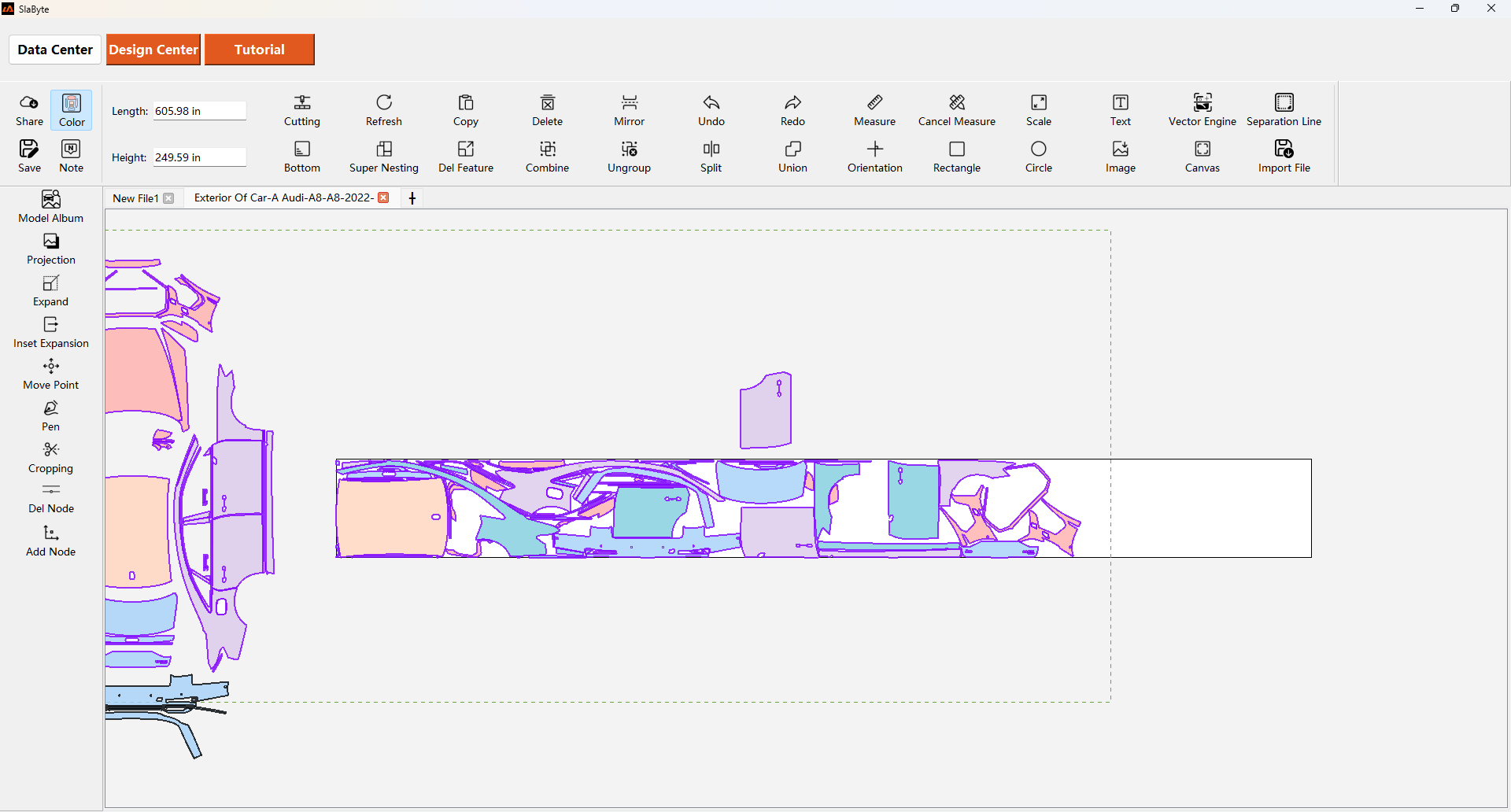
With SlaByte software, shops can access vehicle pattern data and use practical tools for cutting preparation. These tools help teams reduce manual measurement, adjust patterns when needed, and improve cutting efficiency.
For hardware, SlaByte provides different cutting machine options for different shop needs.
The SlaByte S-Cut V60 is suitable for shops that need a versatile cutting solution for PPF, window tint, vinyl, and other film materials.
The SlaByte S-Cut V70 is a compact vertical plotter designed for shops that want to save space while maintaining a professional film-cutting workflow.
The SlaByte S-Cut P80 is suitable for shops that prefer a more stable flatbed-style cutting solution.
For growing PPF shops, the value is not only in buying a machine.
The real value is building a connected workflow:
Vehicle data → software adjustment → film cutting → installation preparation → final delivery
When this workflow becomes stable, the shop can improve efficiency, reduce unnecessary mistakes, and serve customers with more confidence.
Pre-Cut Software Does Not Replace Installers
One misunderstanding about pre-cut software is that it replaces professional installers.
This is not true.
PPF installation still requires skill.
Installers still need to understand surface preparation, stretching, positioning, edge wrapping, contamination control, and final inspection. A cutting machine cannot replace these abilities.
What pre-cut software does is reduce repetitive cutting work and help installers focus on the parts of the job that truly require human skill.
Instead of spending too much time trimming standard shapes, installers can spend more energy on installation quality.
Instead of relying only on one person’s hand-cutting experience, the shop can build a process that more team members can follow.
This is why many mature shops use both methods.
They use pre-cut software for standard panels and keep hand adjustment for special details.
This combination gives the shop both efficiency and flexibility.
What Shops Should Check Before Choosing Pre-Cut Software
Before switching to pre-cut software, shops should compare systems carefully.
A lower price does not always mean lower cost in the long run. If the software is difficult to use, the data is inaccurate, or the machine is unstable, the shop may spend more time fixing problems.
Here are several things to check:
Vehicle data coverage
Does the software include enough vehicle models for your market?
Data accuracy
Are the patterns practical for real installation, especially for popular vehicles?
Software editing tools
Can the shop adjust edges, mirror patterns, save versions, and make changes when needed?
Machine stability
Can the plotter cut PPF smoothly and accurately over long jobs?
Material compatibility
Can the system support different film types, such as PPF, window tint, and vinyl?
Training and support
Can the supplier help the shop understand the software, machine settings, and workflow?
The best pre-cut system should not make the shop more complicated.
It should make the workflow easier to control.
Final Thoughts
More PPF shops are switching to pre-cut software in 2026 because the market is becoming more competitive and more efficiency-driven.
Manual cutting still has its place. It is flexible, useful for custom work, and valuable in the hands of experienced installers.
But for shops that want to grow, manual cutting alone can create limitations.
It can slow down production, increase dependence on senior installers, make training harder, and create more concern when customers worry about cutting on the vehicle.
Pre-cut software helps solve these problems by making the workflow faster, more standardized, and easier to repeat.
For modern PPF shops, the question is no longer simply:
“Can we cut by hand?”
The better question is:
“Can we build a workflow that helps our shop finish more jobs with better control?”
Pre-cut software is not just a cutting tool.
It is a workflow upgrade.
For shops that want to improve efficiency, reduce waste, train staff faster, and build more customer confidence, switching to a professional pre-cut system can be an important step toward long-term growth.