



SlaByte at Bangkok Auto Salon 2026: A Successful Show in Thailand
Bangkok Auto Salon 2026 has officially wrapped up, and for SlaByte, it was a busy few days in the best possible way.
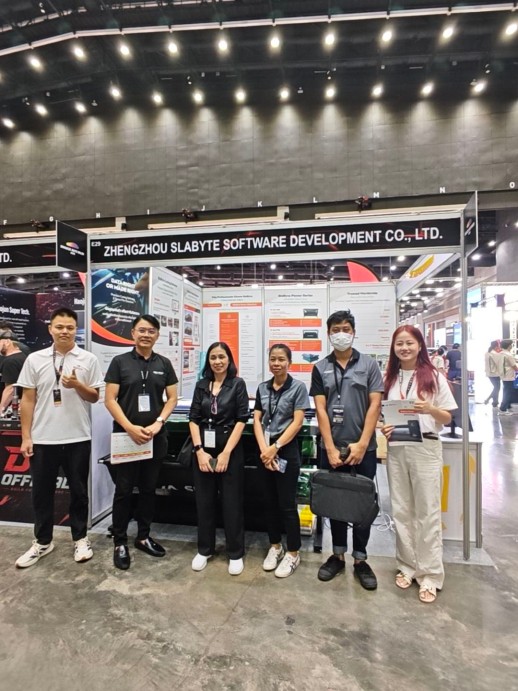
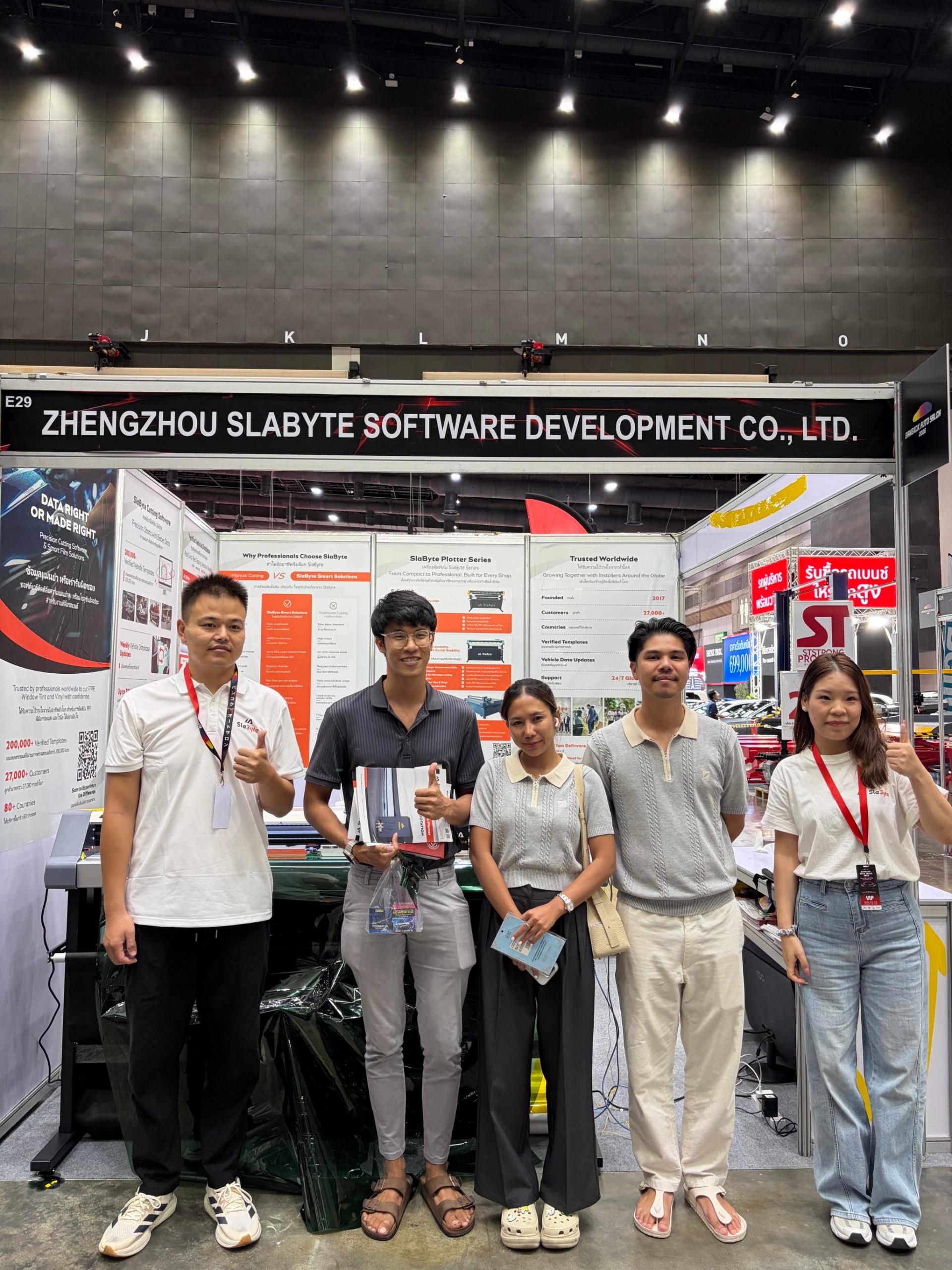
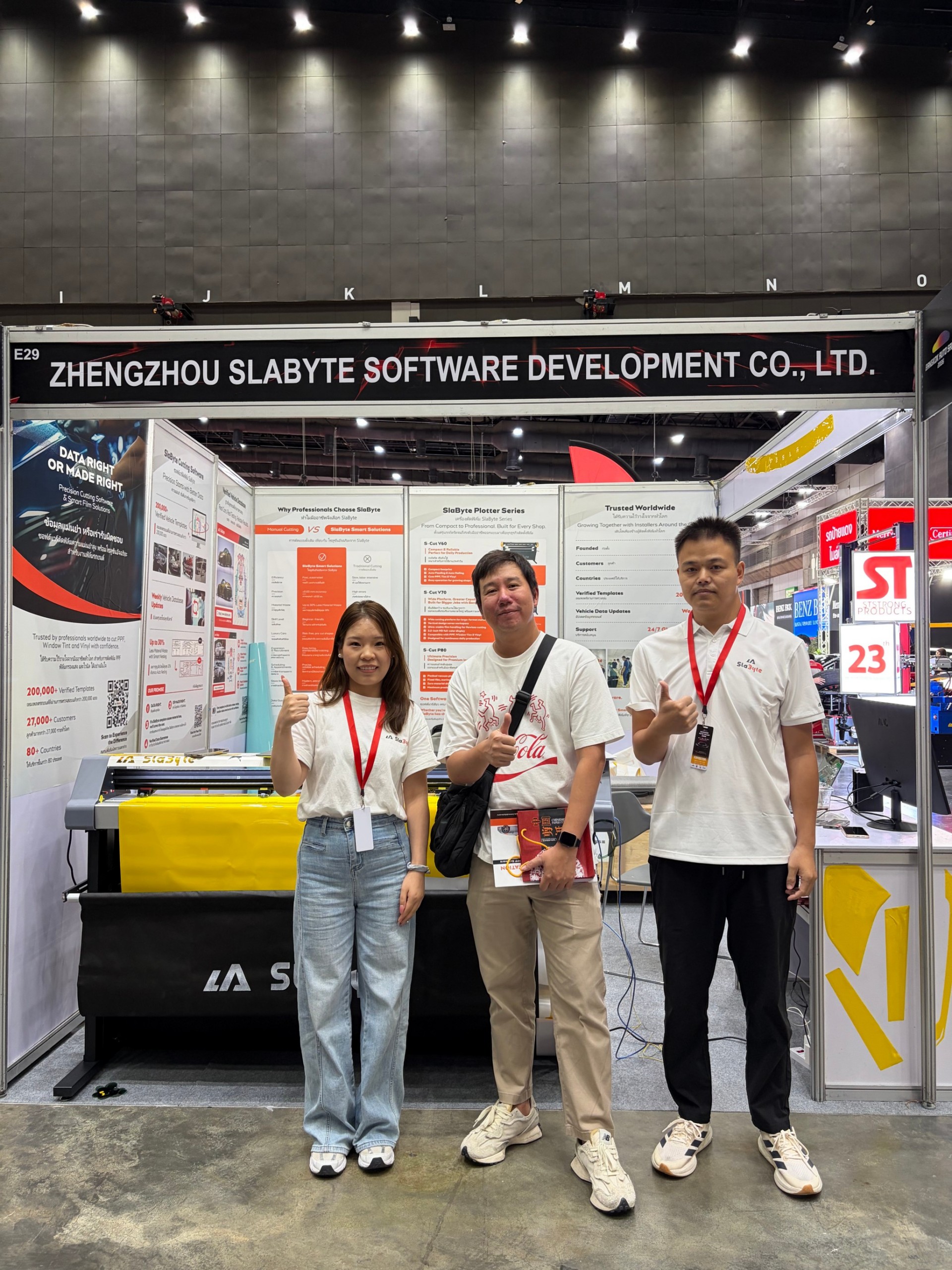
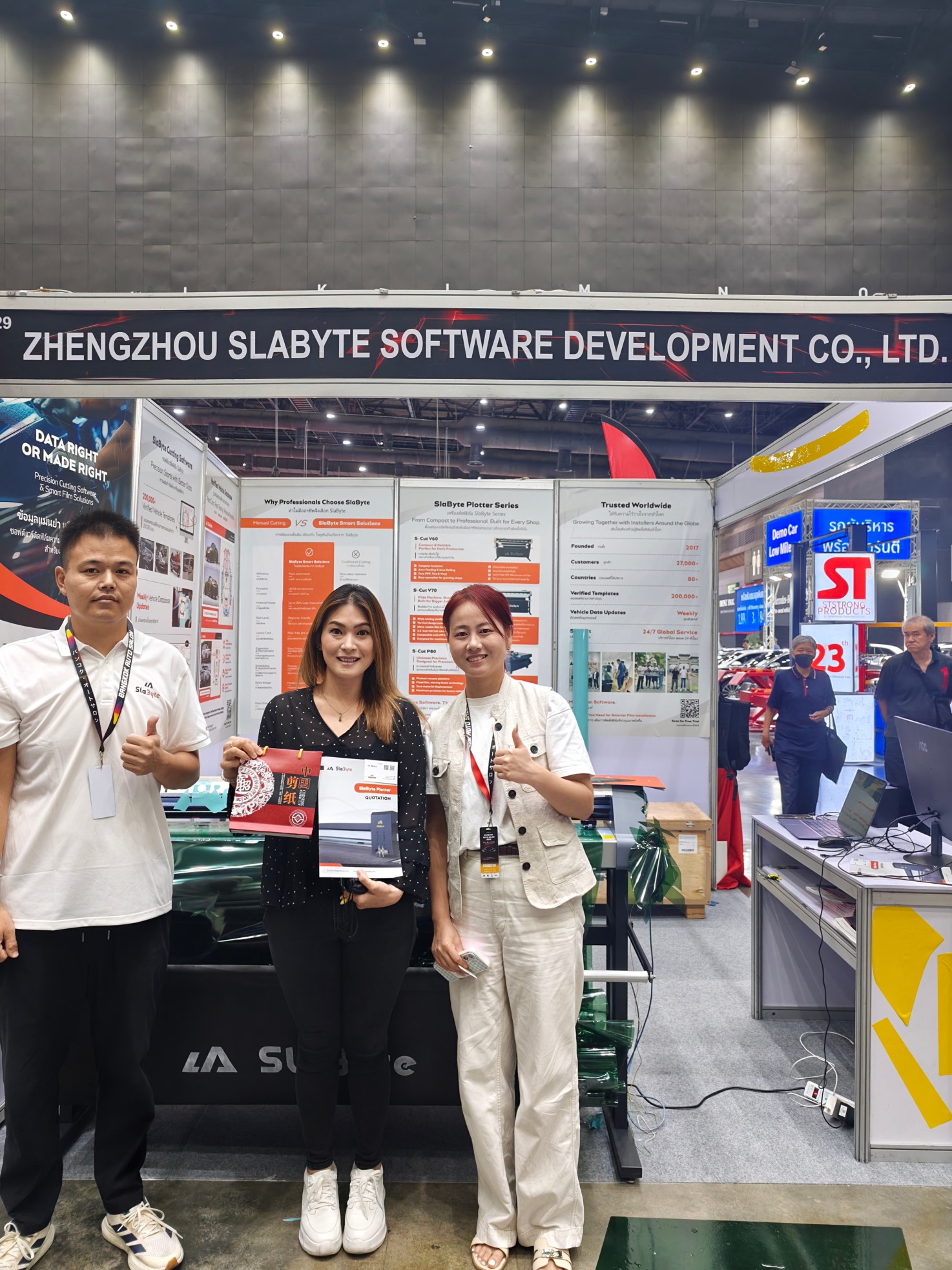
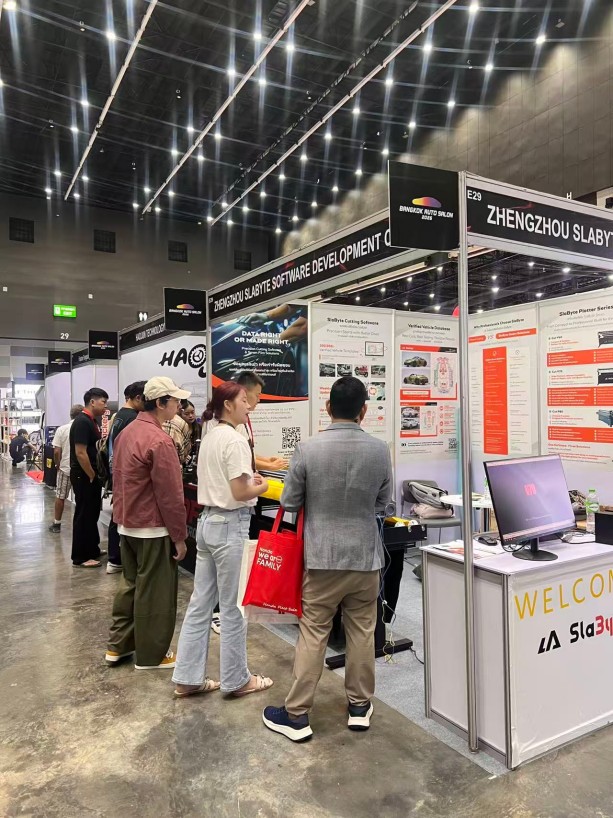
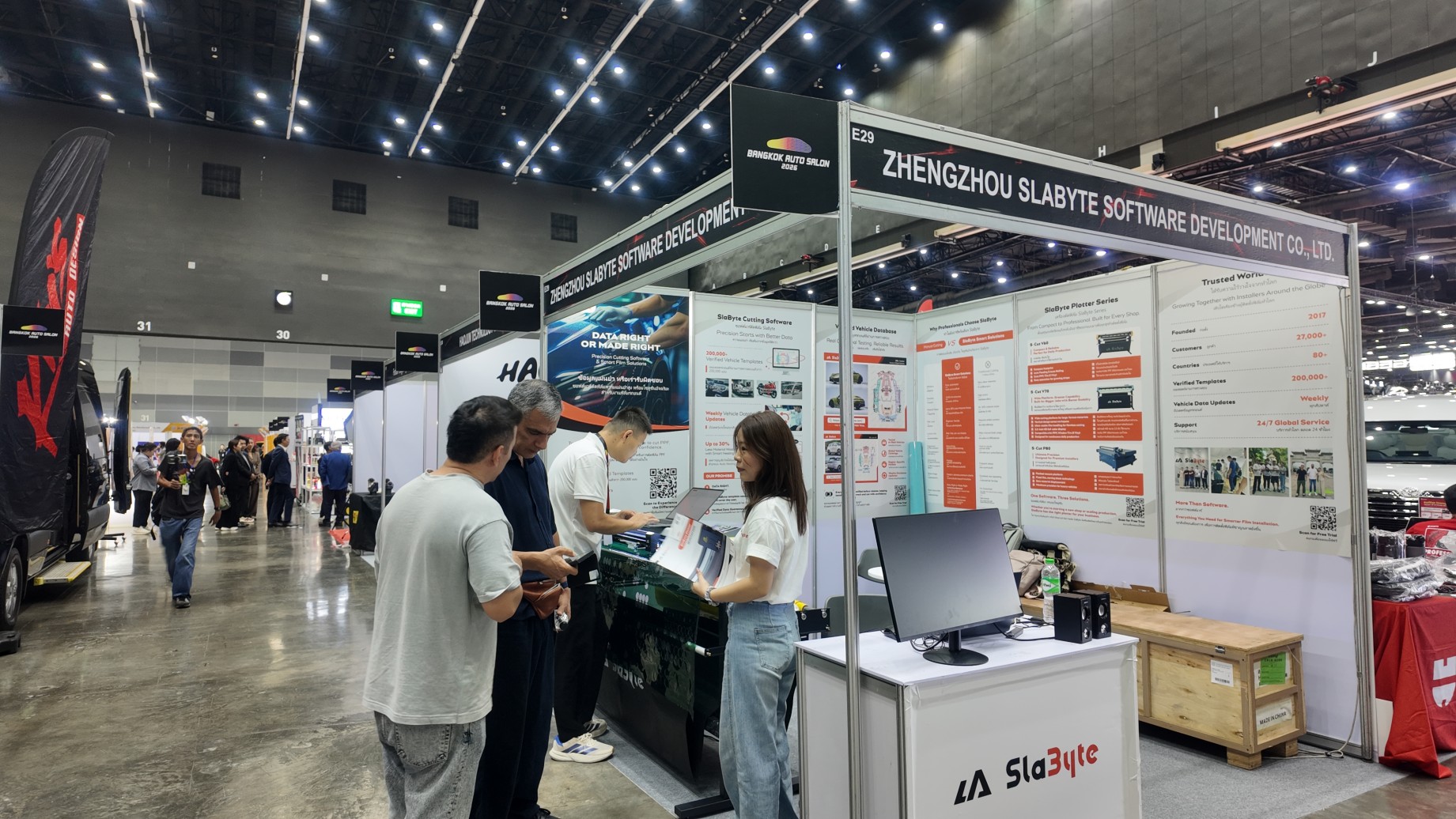
From August 26 to 30, 2026, our team was at Booth E29, EH100, BITEC Bangna, meeting installers, shop owners, distributors, and automotive film professionals from Thailand and beyond.
Before the show, we talked a lot about what we planned to bring.
Cutting software.
Vehicle data.
The S-Cut V70.
But once the show actually started, the most valuable part was not the equipment itself.
It was the conversations around it.
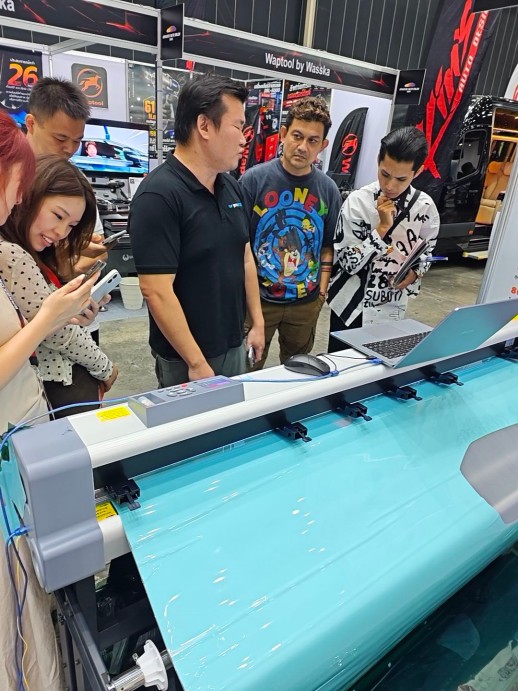
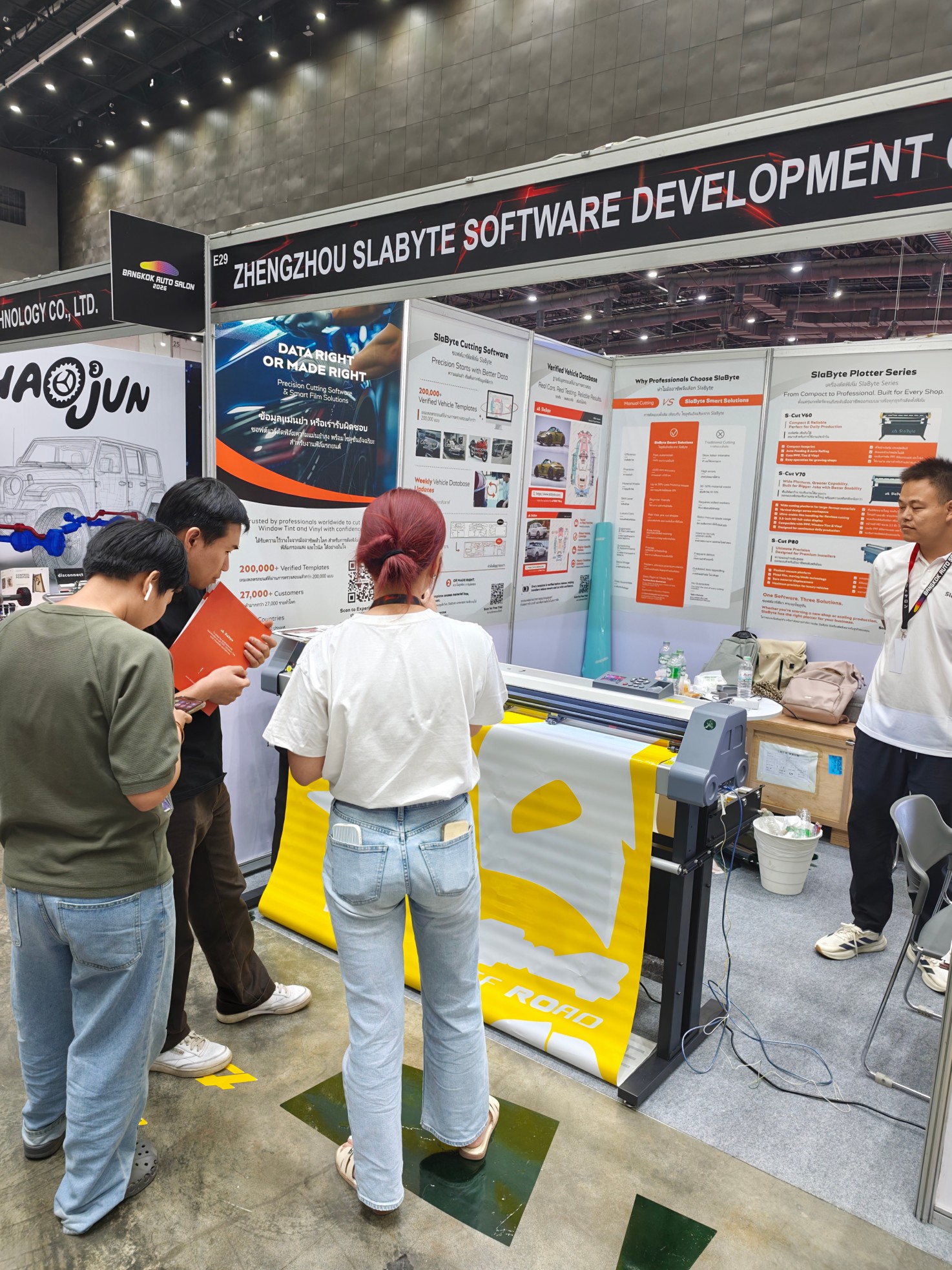
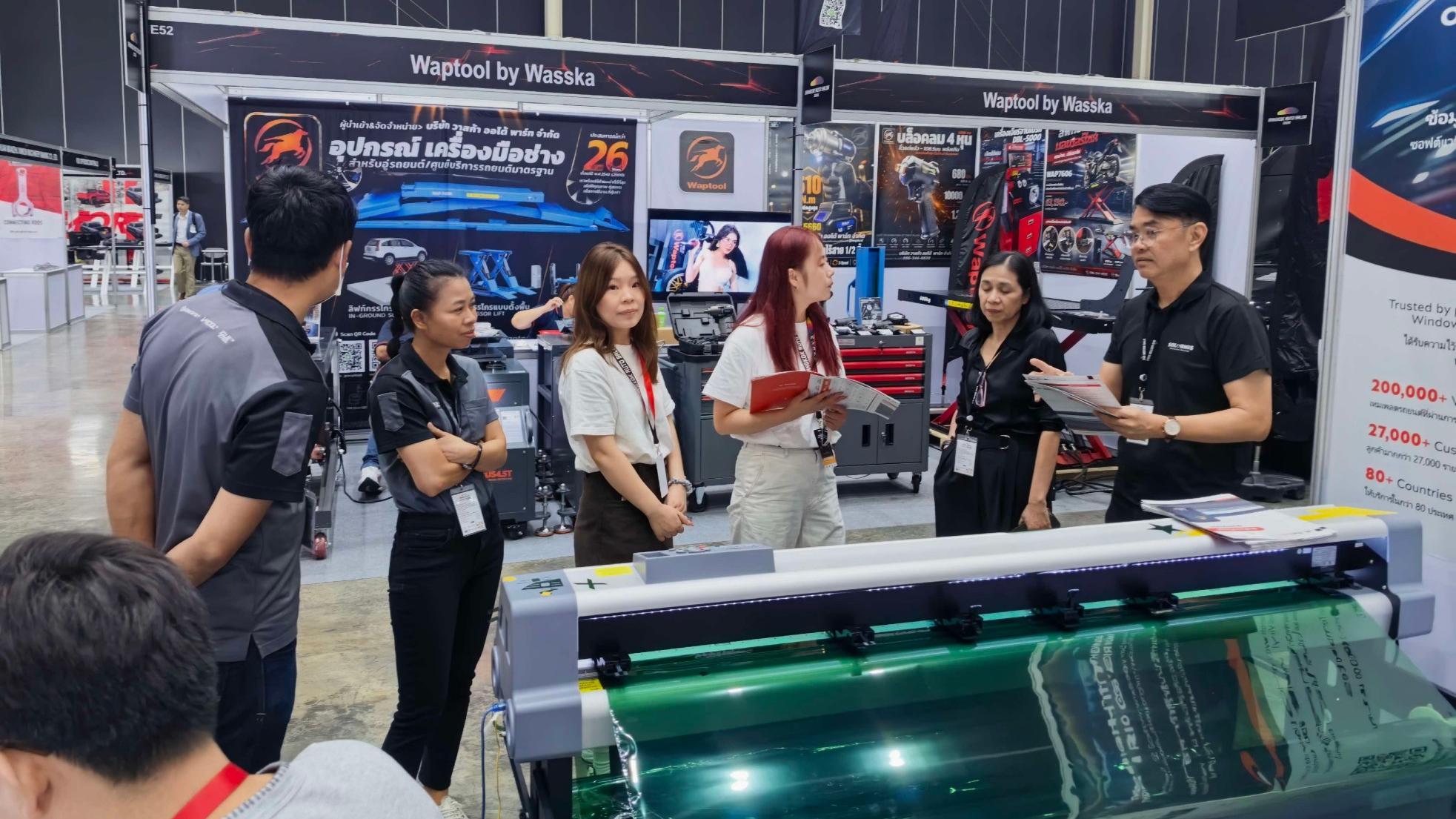
People stopped by to watch the machine cut, ask about vehicle coverage, look at the software, compare workflows, and talk about the kind of work they handle every day.
That is what made this show meaningful for us.
Five Days of Real Conversations in Bangkok
Thailand is not a completely new market for SlaByte.
We already work with more than 1,000 customers in Thailand, so before arriving in Bangkok, we knew there were many local users already familiar with our software and solutions.
What we did not have as much of was face-to-face time.
That changed during the show.
Throughout the exhibition, visitors came to Booth E29 to talk with our team directly.
Some were already familiar with digital cutting.
Some were comparing different systems.
Others were simply trying to understand whether a pre-cut workflow could fit the way their shop currently operates.
The questions were practical.
Can the software cover the vehicles we work on?
Can the pattern be adjusted?
How does the machine handle different film materials?
Can the same workflow support PPF, tint, and vinyl?
What happens if the vehicle version is different?
Those are the kinds of questions we like.
They are not theoretical.
They come from real shops trying to solve real daily problems.
S-Cut V70 Became a Natural Focus at the Booth
The S-Cut V70 was the main machine we brought to Bangkok, and naturally, it became one of the biggest points of interest at the booth.
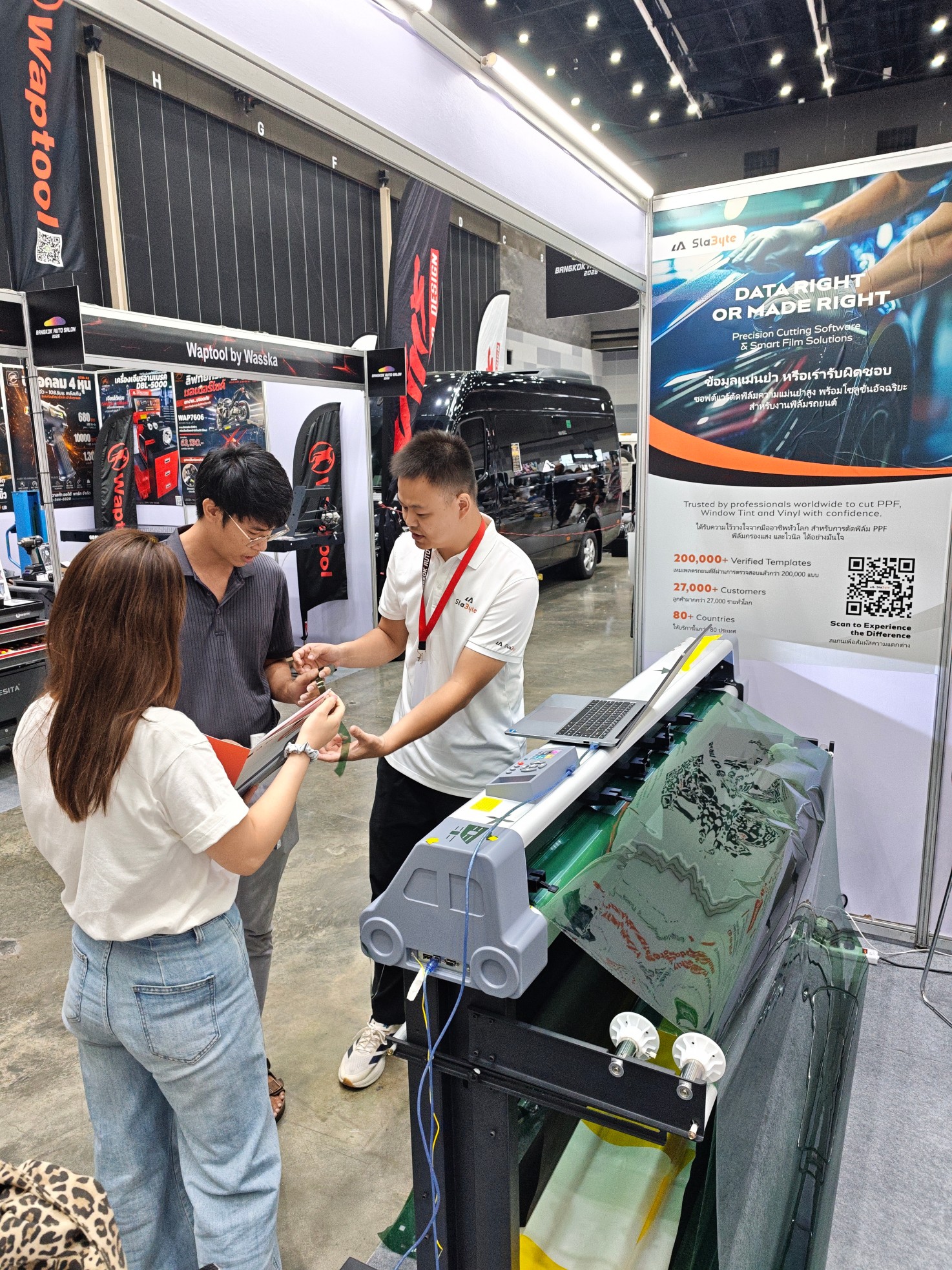
Visitors were able to stand beside the machine and watch the cutting process directly.
That makes a big difference compared with simply reading a product page or looking at specifications.
People could see how the material feeds through the machine, how the cutting job is prepared, and how the plotter fits into the larger workflow.
For many visitors, the useful part was not asking, “How fast can it cut?”
The more useful questions were:
- How stable is the material during a longer job?
- How does the machine work with PPF?
- What about tint or vinyl?
- How much preparation is needed before cutting?
Those questions are more closely connected to daily shop work.
A plotter is not valuable because it looks impressive at a trade show.
It is valuable when it fits into a repeatable process.
That is also why we have previously written about common vinyl plotter problems and maintenance tips . Long-term usability depends on much more than the machine's basic specifications.
The Software and Vehicle Data Drew Just as Much Attention
One thing that stood out during the show was that visitors were not only interested in the hardware.
A lot of conversations quickly moved to software and vehicle data.
That makes sense.
A cutting machine can only execute the file it receives.
Before that happens, the shop still needs to find the correct vehicle, select the right panel, check the pattern, make adjustments if necessary, and prepare the cutting job.
For shops that use pre-cut workflows regularly, this part can have a major impact on efficiency.
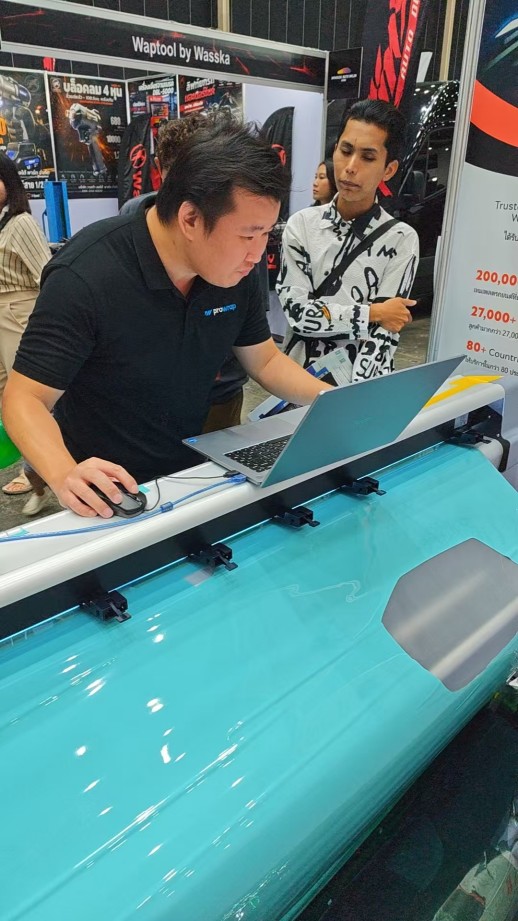
Visitors asked about vehicle coverage, pattern updates, editing flexibility, and how the database handles different models.
These questions matter because the real value of a digital cutting workflow starts before the blade moves.
If the wrong pattern is selected, or if the vehicle version does not match, the shop may lose time and material even if the machine itself works perfectly.
That is why we continue to put a lot of attention on verified vehicle data.
For anyone who wants to understand this part in more detail, our article on how accurate SlaByte PPF cutting data is explains why data quality matters in real installation work.
What We Heard From Thai Installers
Trade shows are useful because they make it easier to see what people actually care about.
At Bangkok Auto Salon 2026, several themes came up repeatedly in our conversations.
One was vehicle coverage.
Shops want to know whether the database covers the vehicles that actually come through their doors, not just whether the total number looks large.
Another was workflow efficiency.
People were interested in how much time could be saved during preparation and how a digital system could reduce repeated manual work.
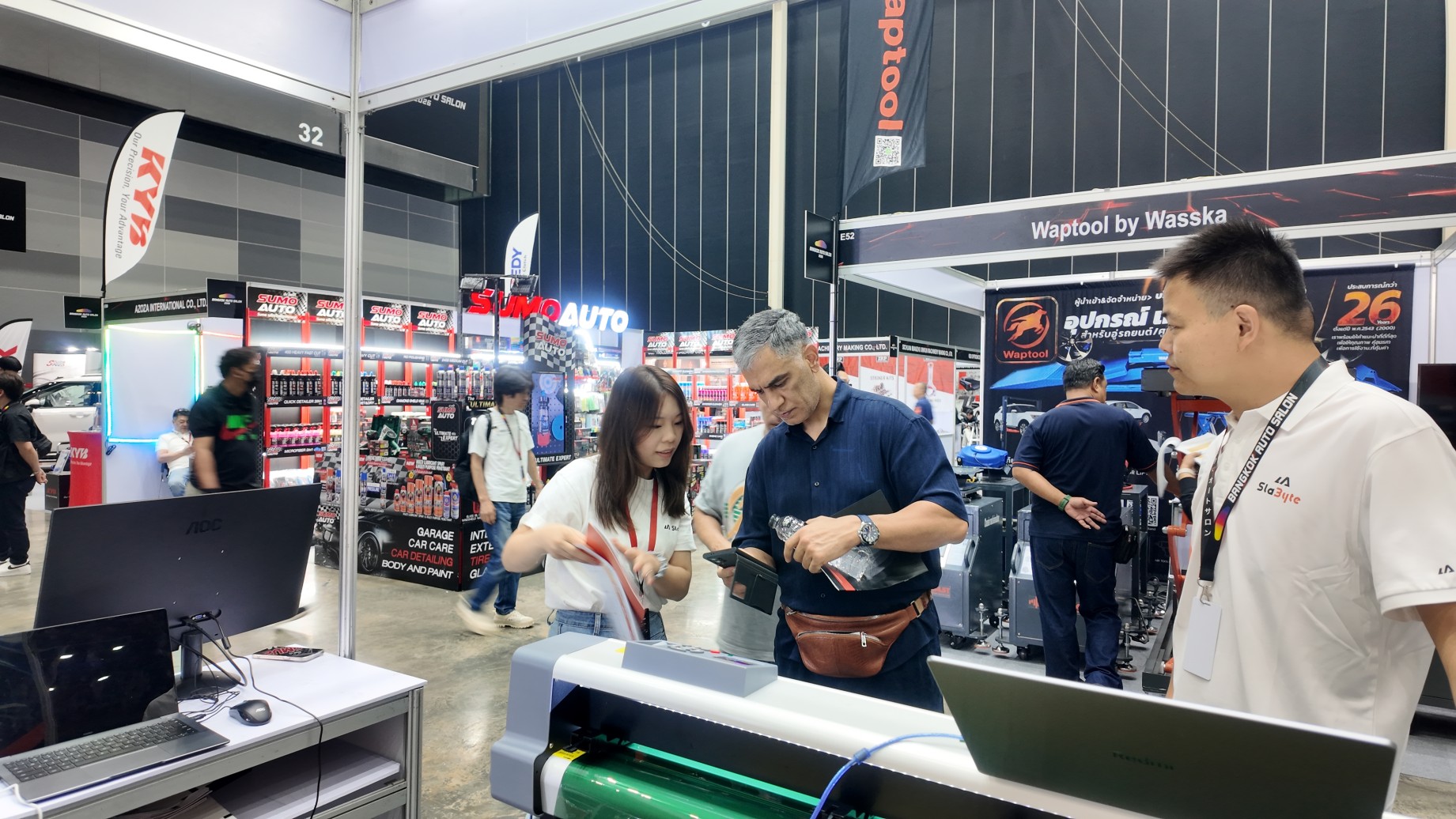
There was also strong interest in handling multiple materials.
Many shops do not only work with one service.
They may install PPF, tint, and vinyl in the same business, so they want tools that can fit into a broader workflow rather than forcing them to manage completely separate systems.
Training was another topic.
As shops grow, owners need new employees to learn faster without sacrificing too much consistency.
These are not problems that one machine or one software feature can solve by itself.
They are workflow problems.
That is why we tend to look at the whole process rather than only one tool.
More Than a Product Demo
One of the best parts of the show was simply meeting people.
There were plenty of technical discussions, but there were also quick conversations, group photos, introductions, and follow-up exchanges that had nothing to do with specifications.
That matters more than it may seem.
A company can support customers online.
It can answer questions through messages.
It can update software and vehicle data remotely.
But face-to-face communication still gives a different kind of understanding.
You can hear how someone explains their workflow.
You can see which part of the system they stop and ask about.
You can understand what makes sense immediately and what still needs a better explanation.
That feedback is useful.
It helps us understand not only what people use, but how they think about the work.
For a market like Thailand, where SlaByte already has more than 1,000 customers, that kind of direct communication is especially valuable.
Real Interest Comes From Real Use Cases
One thing we liked about the Bangkok show was that many visitors did not ask vague questions.
They came with real situations.
A shop might work with a certain type of vehicle.
Another might want to reduce hand cutting.
Someone else might be trying to train a new team.
Another visitor may simply want to reduce mistakes before material is wasted.
Those use cases are more useful than broad product comparisons.
They make it easier to talk about what actually matters:
- whether the pattern is suitable
- whether the data can be adjusted
- whether the machine handles the material well
- whether the workflow is practical for that shop
This is also why we believe workflow from data to delivery is a better way to think about digital cutting than focusing on a single product.
A smooth workflow is built from several parts working together.
A Stronger Connection With the Thai Market
For SlaByte, this exhibition was not simply a short visit.
It gave us a clearer view of the local market.
We already knew that Thailand had active demand for automotive film services.
We already had more than 1,000 local customers.
But being on the ground made that market feel much more specific.
Different shops have different priorities.
Some are focused on speed.
Some care more about data coverage.
Some want easier training.
Some want better control over material waste.
Some simply want a system that feels less complicated.
These differences matter.
They remind us that there is no single “perfect” workflow for every shop.
What works well is usually a combination of good data, suitable equipment, experienced installers, and a process that fits the business.
Thank You, Bangkok
Bangkok Auto Salon 2026 is now over, but the conversations from the show are still continuing.
We want to thank everyone who stopped by Booth E29.
Thank you to the installers who watched the V70 demonstrations.
Thank you to the shop owners who asked detailed questions.
Thank you to the distributors and industry professionals who shared their experience.
And thank you to the existing SlaByte users who came to meet us in person.
For our team, the show was a good reminder that the best product conversations usually start with a real problem.
Not with a sales pitch.
We came to Bangkok to show software, vehicle data, and the S-Cut V70.
We left with something more useful:
a better understanding of what Thai shops are actually looking for.
What Comes Next
The exhibition may be finished, but our work in Thailand is not.
SlaByte will continue improving vehicle data, software workflows, and support for local users.
We will also keep listening to the feedback we received during the show.
Because in the end, better tools should come from understanding how people actually work.
Bangkok gave us plenty to think about.
And plenty to build on.
Thank you, Thailand.
See you next time.