



PPF Cutting Machine vs Cutting Data: What Actually Determines Installation Quality?
When buying equipment for a PPF shop, many buyers naturally focus on the cutting machine first.
They compare cutting speed, machine size, brand reputation, price, and technical specifications.
These factors are important, but after running a PPF business for some time, many shop owners discover something unexpected:
The machine itself is not always the biggest factor that determines installation quality.
The real difference often comes from the data behind the machine.
A cutting machine can only follow instructions.
If the pattern data is inaccurate, outdated, or difficult to adjust, even an advanced machine cannot create a perfect result.
Accurate cutting data combined with reliable equipment can help shops achieve more consistent installations, reduce waste, and improve daily workflow.
For modern PPF businesses, the question is no longer only:
"Which cutting machine should I buy?"
The better question is:
"Does my complete cutting system have accurate data, reliable software, and a workflow that supports my installers?"
Why Buyers Usually Focus on the Cutting Machine First
When entering the PPF industry, many buyers follow a similar purchasing process.
- Search for PPF cutting machines
- Compare specifications
- Check cutting speed
- Compare prices
This approach is understandable because a cutting machine is a visible investment.
However, the machine is only an execution tool.
It does not decide:
- How much edge allowance a pattern needs
- How vehicle curves should be handled
- Where installers need adjustments
- Whether a pattern matches real installation conditions
The machine follows the instructions it receives.
That means the final result depends heavily on the quality of the data behind those instructions.
Machine Performance vs Data Quality
| Buyers Usually Focus On | What Actually Affects Results |
|---|---|
| Cutting Speed | Pattern Accuracy |
| Machine Size | Vehicle Data Quality |
| Hardware Features | Complete Workflow |
| Purchase Price | Long-Term Efficiency |
A Cutting Machine Only Executes What It Receives
A common misunderstanding in the PPF industry is that a better machine automatically creates better installations.
The reality is different.
A cutting machine does not understand vehicle design. It does not know whether a specific bumper area is difficult to install or whether an installer prefers additional edge coverage.
It simply follows the cutting instructions provided by software and data.
Incorrect data can lead to:
- Wrong pattern size
- Material waste
- Longer installation time
- More manual corrections
This is why professional PPF shops pay close attention to data quality.
A high-quality machine with poor data can still create poor results.
A reliable machine combined with accurate data creates a more predictable workflow.
What Makes Professional PPF Cutting Data Different?
Not all PPF data is created equally.
Two companies may provide vehicle patterns, but the quality and usability of those patterns can be very different.
1. Vehicle Coverage
The automotive market changes quickly.
New vehicles, electric vehicles, and premium models continue entering the market.
A professional data system needs not only a large database but also regular updates.
2. Pattern Accuracy
Pattern accuracy directly affects installation quality.
Professional patterns should consider:
- Correct panel shape
- Proper edge positioning
- Real installation experience
- Reasonable stretching allowance
A small digital error can become a bigger installation problem.
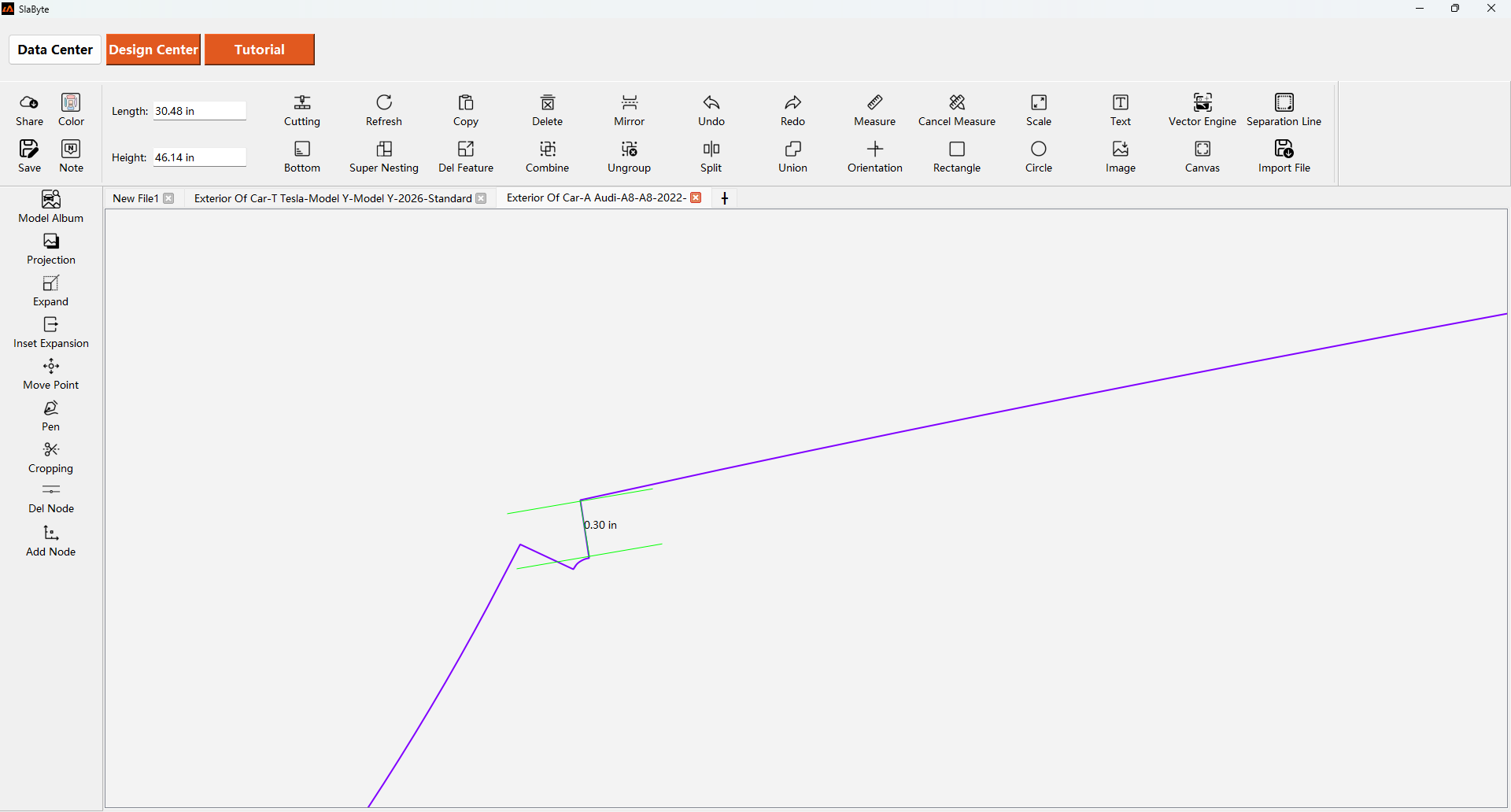
3. Why Edge Wrapping Matters in PPF Data
A professional PPF template is not only about matching the vehicle surface.
It also needs to consider how the film should extend beyond the visible edge during installation.
Proper edge wrapping helps installers achieve:
- Cleaner finished edges
- Better protection coverage
- Less manual trimming
- More consistent results
Many installation problems happen because the pattern looks correct digitally but does not consider real installation conditions.
This is why experienced installers pay attention to how much coverage a template provides.
A good pattern should support the installer, not create additional work.
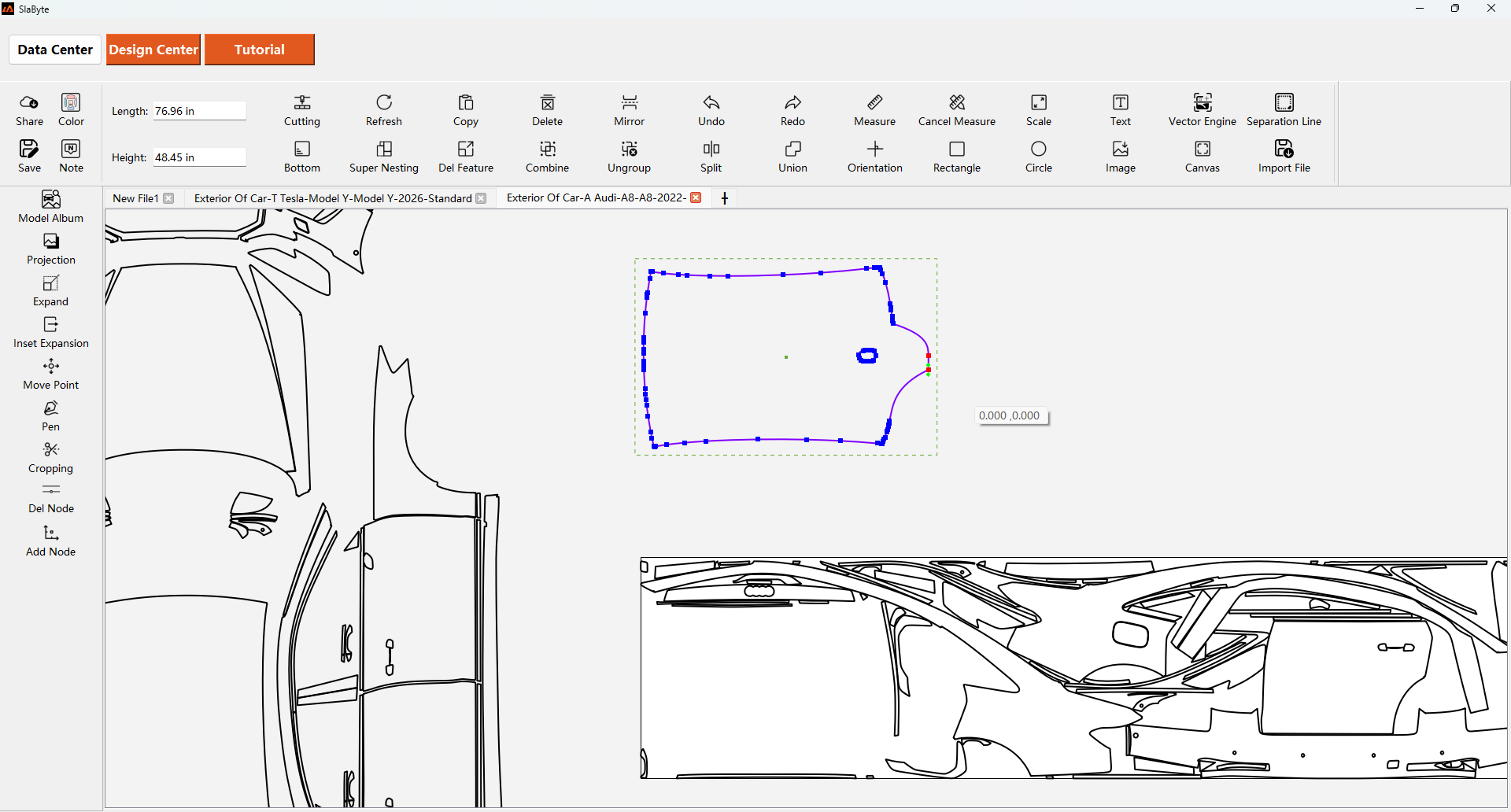
4. Why Flexible Pattern Editing Is Important
Even accurate data cannot cover every possible situation.
Real installation environments are always changing.
Different installers may have different working habits.
Modified vehicles and special customer requirements may also require adjustments.
This is why flexible editing functions are important.
Professional PPF software should allow users to:
- Move pattern nodes
- Adjust edges
- Modify specific areas
- Create customized solutions
Why Incorrect PPF Data Creates Hidden Costs
Many shops think data problems are only technical issues.
In reality, incorrect data creates real business costs.
1. Material Waste
PPF material is expensive.
When a pattern is incorrect, the entire piece of film may need to be discarded.
One mistake may not seem serious.
But repeated mistakes can directly reduce monthly profit.
2. Longer Installation Time
Incorrect patterns usually create additional work:
- Manual trimming
- Extra adjustments
- Re-checking measurements
- Installation corrections
This reduces daily vehicle capacity.
3. Customer Experience Problems
Customers usually do not see the data behind the installation.
They only see the final result.
If the installation takes longer than expected or requires repeated corrections, customer satisfaction can be affected.
Why Data Matters Even More for Small PPF Shops
Large PPF studios often have experienced installers who can manually fix problems.
Small shops usually have fewer people and less room for mistakes.
For many small businesses, one experienced installer may handle most difficult jobs.
This is why accurate data and standardized workflows are becoming increasingly important.
This is also why more small film businesses are adopting pre-cut software workflows .
Machine, Software, and Data Must Work Together
A successful PPF installation workflow is not created by one single component.
It requires:
- Accurate vehicle data
- Reliable software
- Stable cutting equipment
- Experienced installers
The relationship is simple:
Vehicle Data
↓
PPF Software
↓
Cutting Machine
↓
Installer
↓
Final Result
A powerful machine cannot fix inaccurate data.
Accurate data cannot fully replace installation skills.
The best results come when all parts work together.
Learn more about complete workflow improvement in: workflow from data to delivery .
How Should Buyers Evaluate a PPF Data Provider?
Before choosing a data provider, buyers should ask:
- How accurate are the vehicle patterns?
- How often is new data updated?
- Can installers edit templates?
- How are data issues handled?
A good data provider should not only provide files.
It should support the complete installation process.
The Future of PPF Installation Is Data-Driven
Hand cutting will not disappear overnight.
Experienced installers will always have value.
However, the industry is moving toward smarter workflows.
- Lower material waste
- Faster training
- More consistent results
- Better workflow management
The future is not about replacing installers with machines.
It is about helping skilled installers work with better systems.
Final Thoughts
Many buyers believe the cutting machine is the most important investment in a PPF business.
But the machine is only one part of the complete solution.
The quality of the data behind the machine often determines how efficiently the whole process works.
Better data means fewer mistakes, less waste, and more predictable growth.
The best PPF operation combines accurate data, reliable equipment, skilled installers, and a smarter workflow.