



How Accurate Is SlaByte PPF Cutting Data?
If you’ve been in the PPF business for a while, you already know this:
Accuracy is everything.
You can have the best installer, the cleanest shop, and premium film —
but if the cutting data is off, even slightly, the whole job becomes harder.
So the real question is:
How accurate is SlaByte PPF cutting data?
Let’s talk about it honestly.
 First — Why Cutting Data Accuracy Really Matters
Some people think,
“1–2mm off isn’t a big deal.”
In real-world installation, it absolutely is.
1. Material Waste Adds Up Fast
PPF is expensive.
Especially full front kits or full-body jobs.
If a bumper pattern is misaligned or short on an edge, you often can’t “stretch and fix” it cleanly. You recut.
One wasted bumper panel here and there may not hurt.
But multiply that over a month — it’s real money.
Accurate PPF template data directly affects your material cost.
2. Installation Time Becomes Unpredictable
When patterns fit properly:
-
Edges align smoothly
-
No aggressive stretching
-
No excessive trimming
When they don’t:
-
You adjust manually
-
You re-trim on the vehicle
-
You lose workflow rhythm
In a busy shop, predictable install time is everything.
3. Customer Expectations Are Higher Than Ever
Today’s customers notice details.
Edges lifting.
Uneven gaps.
Over-trimmed corners.
Precision cutting isn’t just about efficiency —
it’s about protecting your shop’s reputation.
How SlaByte Builds Its Vehicle Template Database
SlaByte focuses heavily on its data system — not just the machine.
Here’s how their cutting data is typically structured.
Real Vehicle-Based Pattern Development
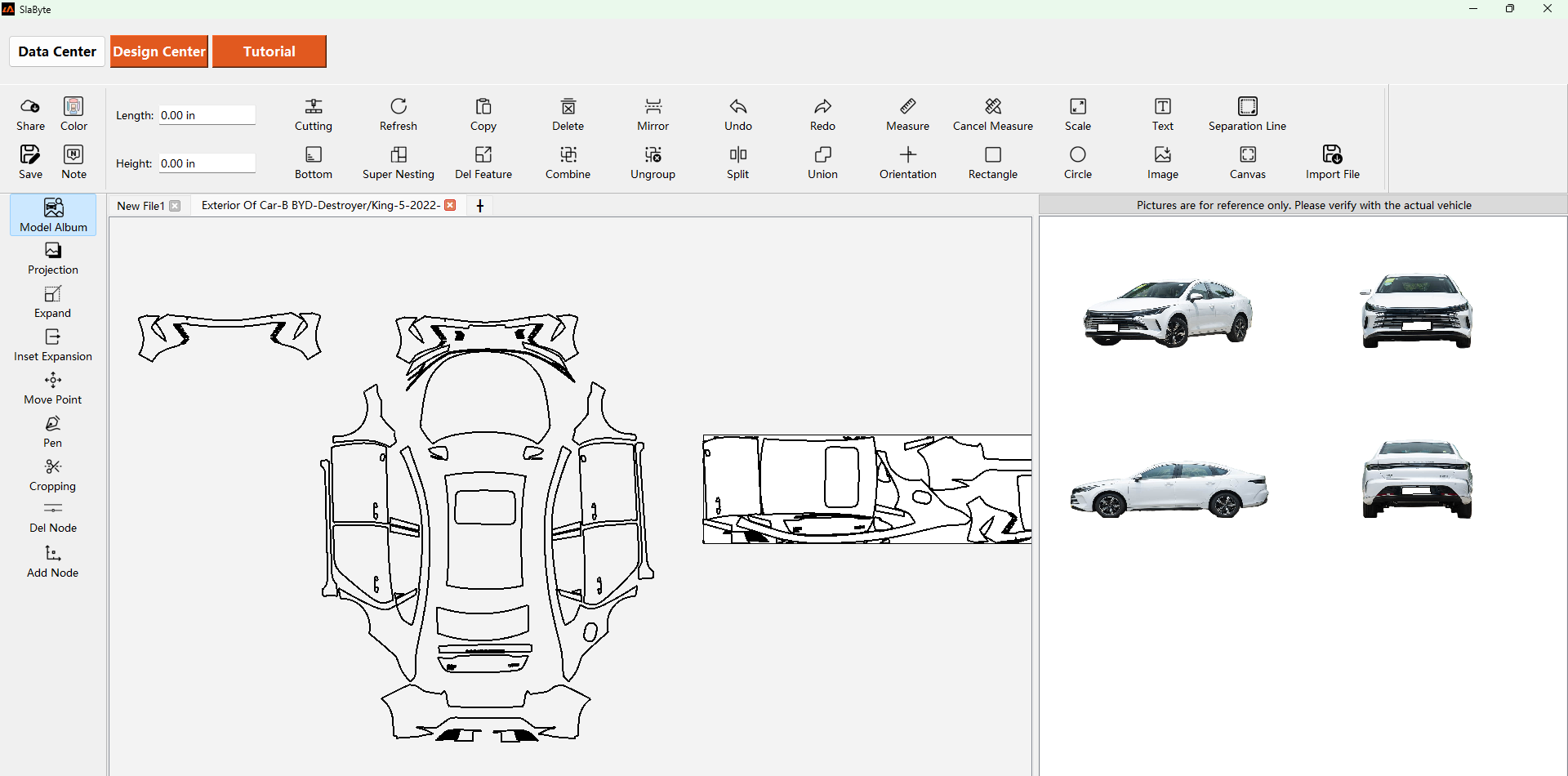
Instead of relying purely on digital approximations, vehicle templates are developed from real car measurements.
Complex areas like:
-
Front bumpers
-
Headlight curves
-
Wheel arches
-
Door handles
are carefully mapped to reflect actual panel shapes.
That’s important because bumpers are rarely “perfectly symmetrical” in real life.
Multiple Testing and Refinement
Templates are not simply released after one scan.
They go through:
-
Test cuts
-
Real installation checks
-
Installer feedback adjustments
This reduces edge-short issues and alignment problems that many shops experience with lower-quality databases.
Continuous Database Updates
The auto market moves fast — especially EV models.
New releases are added to the system regularly, helping shops stay current without relying on outdated templates.
If your business installs newer models frequently, database freshness matters.
 What Level of Accuracy Can You Expect?
Let’s be realistic:
No PPF software in the world delivers “zero deviation.”
Why?
Because:
-
Manufacturers have panel tolerances
-
Different production batches vary slightly
-
Aftermarket repaint jobs affect alignment
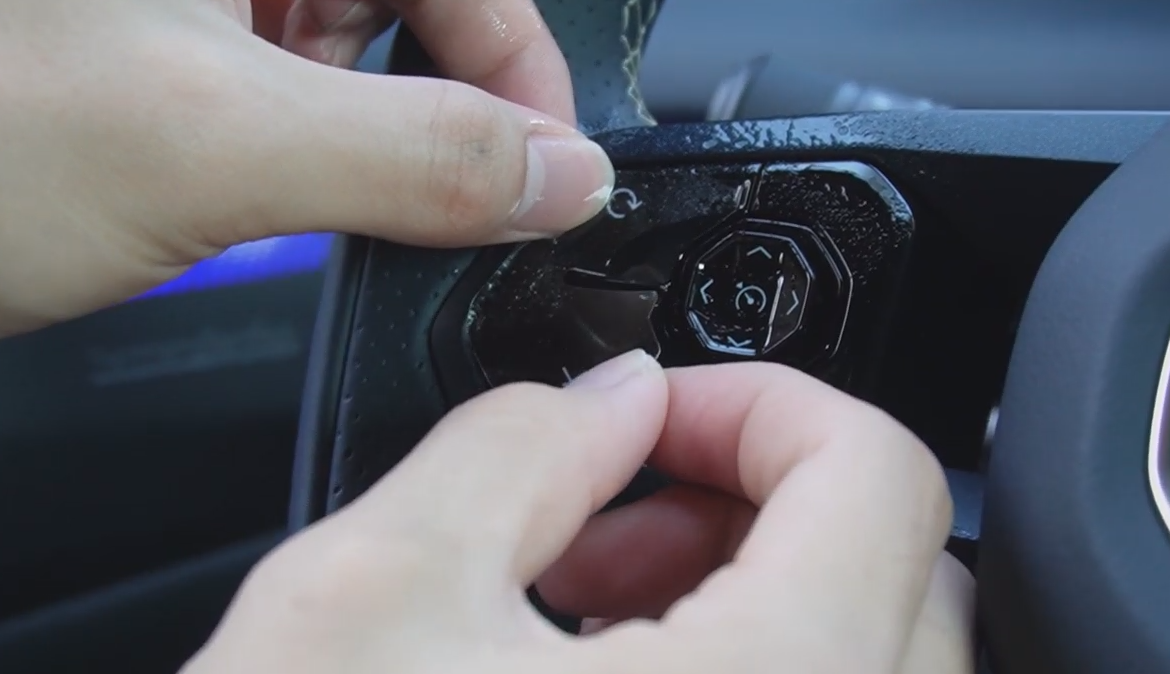
In properly calibrated conditions, SlaByte cutting data typically performs within a very tight working tolerance that minimizes the need for heavy trimming or correction.
Most adjustments, if needed, are minor — and often preference-based rather than error-based.
That’s an important distinction.
Accuracy Is Not Only About Software
Many shops blame data when the real issue is machine setup.
To get maximum precision, you need:
Proper Plotter Calibration
Even a small tracking misalignment can amplify cutting deviation across a long bumper pattern.
Correct Blade Pressure and Depth
Too much pressure damages liner.
Too little creates incomplete cuts.
Different PPF brands may require slightly different settings.
Stable Material Feeding
If the film shifts during feeding, no software can compensate for that.
Keeping tension smooth and consistent improves final accuracy.
How SlaByte Compares to Manual Cutting
Manual cutting depends entirely on installer skill.
With software-based cutting:
-
Patterns are repeatable
-
Edges are consistent
-
Time per job becomes stable
Over time, repeatability is what improves profit margins.
You reduce:
-
Guesswork
-
Stress
-
Rework
And that’s where precision really pays off.
What Shops Typically Notice After Switching
Shops that adopt structured cutting systems often report:
-
Reduced material waste
-
More predictable installation time
-
Less on-car trimming
-
Improved consistency between installers
The benefits aren’t dramatic overnight miracles.
They’re steady operational improvements.
And those improvements compound.
Frequently Asked Questions
How often is SlaByte’s database updated?
New vehicle models are added as they become available, keeping the system relevant for modern installations.
Can I manually adjust patterns?
Yes. Installers can modify templates and save adjusted versions for future use.
Does cutting accuracy depend on the plotter?
Absolutely. Proper calibration and blade setup are essential.
What if a specific vehicle isn’t in the system?
Shops can request additions through support channels.
 Final Thoughts
PPF cutting accuracy isn’t just about “does it fit?”
It’s about:
-
How much material you waste
-
How smooth your workflow feels
-
How consistent your results look
-
How confident your installers are
Reliable data reduces friction in your daily operation.
And in this industry, reducing friction means increasing profit.
If precision matters to your shop,
cutting data quality should never be an afterthought.